

How many UK employers offer dental benefits?
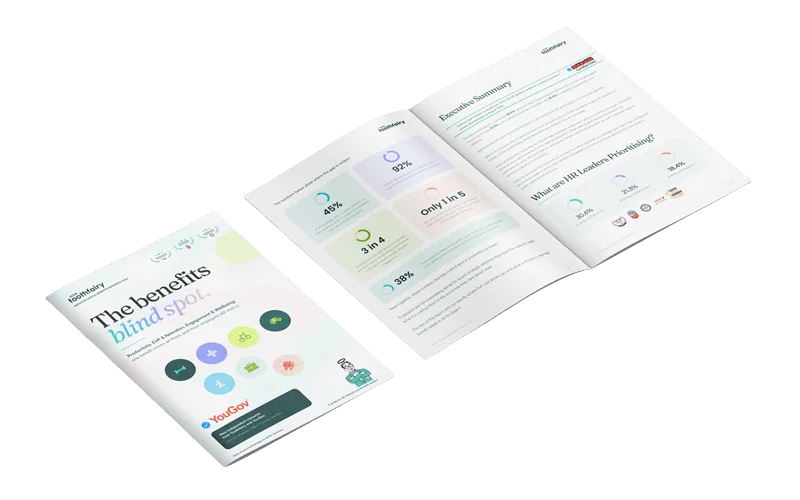
About half do. 45% of the HR decision makers we surveyed said their business offers no dental provision at all [1].
Where dental is offered, the most common route is through private medical insurance.
| Answer | Chart | Share of respondents |
|---|---|---|
| No dental provision | 45% | |
| Dental included in private medical insurance | 19% | |
| Employee-funded cash plan | 15% | |
| Employer-funded cash plan | 13% | |
| Traditional dental insurance | 6% |
Single answer. Remaining respondents answered other or don't know.
Why don't more employers offer dental benefits?
Budget is the most common reason, but only just.
Among the 456 businesses with no dental provision, 24% cited budget constraints, 23% said they believe employees arrange dental care privately and 22% said dental is not a strategic priority [1]. One in ten had not reviewed dental recently.
Can employees get urgent dental care when they need it?
Most HR leaders are not sure. 20% are very confident their employees could get urgent dental care within 48 hours through their current provision, and 17% are not at all confident [1].
The wider picture explains why: the British Dental Association estimates 13 million adults in England had an unmet need for NHS dentistry in 2024, with around 780,000 on waiting lists [2].
"Most dental emergencies I see didn't start as emergencies. A small problem that could have been treated early turns into pain, infection or time off work because the person couldn't get seen in time."
 Dr Deepak Aulak, dentist, GDC 264962
Dr Aulak is a co-founder of Toothfairy. Shared as his view on oral health and access to dental care.
How does dental pain affect absence at work?
It is common and hard to see in absence data. 38% of HR leaders say unplanned, short-notice absence has a severe impact on their operations [1].
Yet 29% record unplanned absence as general sickness without noting the cause, and 15% record it as annual or unpaid leave, so dental absence rarely shows up as dental.
Employee surveys point the same way. In a 2023 Bupa survey of 2,049 UK employees, 48% said they had called in sick or left work early because of dental pain, and 73% had delayed going to the dentist [3]. Denplan (Simplyhealth) estimates toothache has led to at least 23 million sick days across the UK [4].
What are HR leaders' top priorities for 2026?
Productivity comes first. 30.6% of HR leaders named workforce productivity and performance as their single biggest people priority for 2026, followed by attracting and retaining talent and strengthening EVP (21.3%) and engagement and wellbeing (18.4%) [1].
Talent is also shaping benefits spend: 59% of UK employers say competition for talent is a key factor in their benefits strategy [5].
What do HR leaders look for in a new benefit?
Cost and proof that people will use it.
49% of HR leaders named cost and internal budget justification as a concern when evaluating a new benefit, 36% named ease of implementation and admin, and 35% asked whether employees would actually use it [1]. 27% wanted measurable ROI.
Businesses that already offer dental gave similar reasons for frustration. Among 564 respondents with dental provision, 39% cited rising premiums, 28% administrative burden and 24% low utilisation [1].
| Answer | Chart | Share of respondents |
|---|---|---|
| Cost and budget justification | 49% | |
| Ease of implementation and admin | 36% | |
| Whether employees will use it | 35% | |
| Whether it works for the whole workforce | 29% | |
| Measurable ROI | 27% |
How do HR leaders research new benefits?
Most start on their own. 32% research online before contacting any provider, and 22% read a case study or research report first [1].
26% rely on a broker's recommendation and 25% on a recommendation from another HR professional. LinkedIn is the most-used source of professional insight, named by 34%.
Frequently asked questions
Who carried out this research?
YouGov plc carried out the survey for Toothfairy. 1,020 UK HR and benefits decision makers answered online between 28 May and 17 June 2026.
What counts as dental provision in the survey?
Respondents chose from dental included in private medical insurance, an employee-funded cash plan, an employer-funded cash plan, traditional dental insurance, other, or no dental provision.
Is Toothfairy a dental insurance provider?
No. Toothfairy is an on-demand dental benefit. Employees get access to UK-registered dentists through an app. It is not insurance, and it can sit alongside a cash plan or insurance an employer already offers.
Can I quote these figures?
Yes. Please cite "YouGov for Toothfairy (2026)" and link to this page. A ready-made reference is in the box below.
Where can I get the full report?
Use the form at the top of this page and we will send the full PDF to your work email.
How the research was done
- Carried out by
- YouGov plc, on behalf of Toothfairy
- Sample
- 1,020 UK HR and benefits decision makers, YouGov UK panel
- Fieldwork
- 28 May to 17 June 2026, online
- Reporting
- Percentages use all respondents unless a smaller base is stated; bases under 50 are not reported.
YouGov plc surveyed 1,020 UK HR and benefits decision makers online between 28 May and 17 June 2026 on behalf of Toothfairy. Respondents were members of the YouGov UK panel. Percentages are based on all respondents unless a smaller base is stated. Figures from bases under 50 are not reported.
Toothfairy is certified by LegitScript as a telemedicine website.
Cite this research
YouGov plc for Toothfairy (2026) UK employer dental benefits survey. 1,020 UK HR decision makers, fieldwork 28 May to 17 June 2026. Available at: https://benefits.toothfairyapp.co.uk/employer-dental-benefits

Dorian Ionita
Dorian works on research, content and growth at Toothfairy. He looks at data on employee benefits and workplace health and writes up what it shows for HR and benefits teams.
LinkedInReferences
- YouGov plc for Toothfairy (2026) UK employer dental benefits survey. 1,020 UK HR decision makers, fieldwork 28 May to 17 June 2026.
- British Dental Association (2024) '13 million unable to access NHS dentistry'. Available at: https://www.bda.org/media-centre/13-million-unable-to-access-nhs-dentistry/ (Accessed: 20 October 2026).
- Bupa (2023) 'Employees delay dental treatment worrying about time off work'. Available at: https://www.bupa.com/news-and-press/press-releases/2023/employees-delay-dental-treatment (Accessed: 20 October 2026).
- Simplyhealth (2023) '23 million sick days due to dental pain'. Available at: https://newsroom.simplyhealth.co.uk/23-million-sick-days-due-to-dental-pain/ (Accessed: 20 October 2026).
- WTW (2025) 'Amid cost pressures, UK employers are shifting their benefit strategy, WTW survey finds'. Available at: https://www.wtwco.com/en-gb/news/2025/06/amid-cost-pressures-uk-employers-are-shifting-their-benefit-strategy-wtw-survey-finds (Accessed: 20 October 2026).